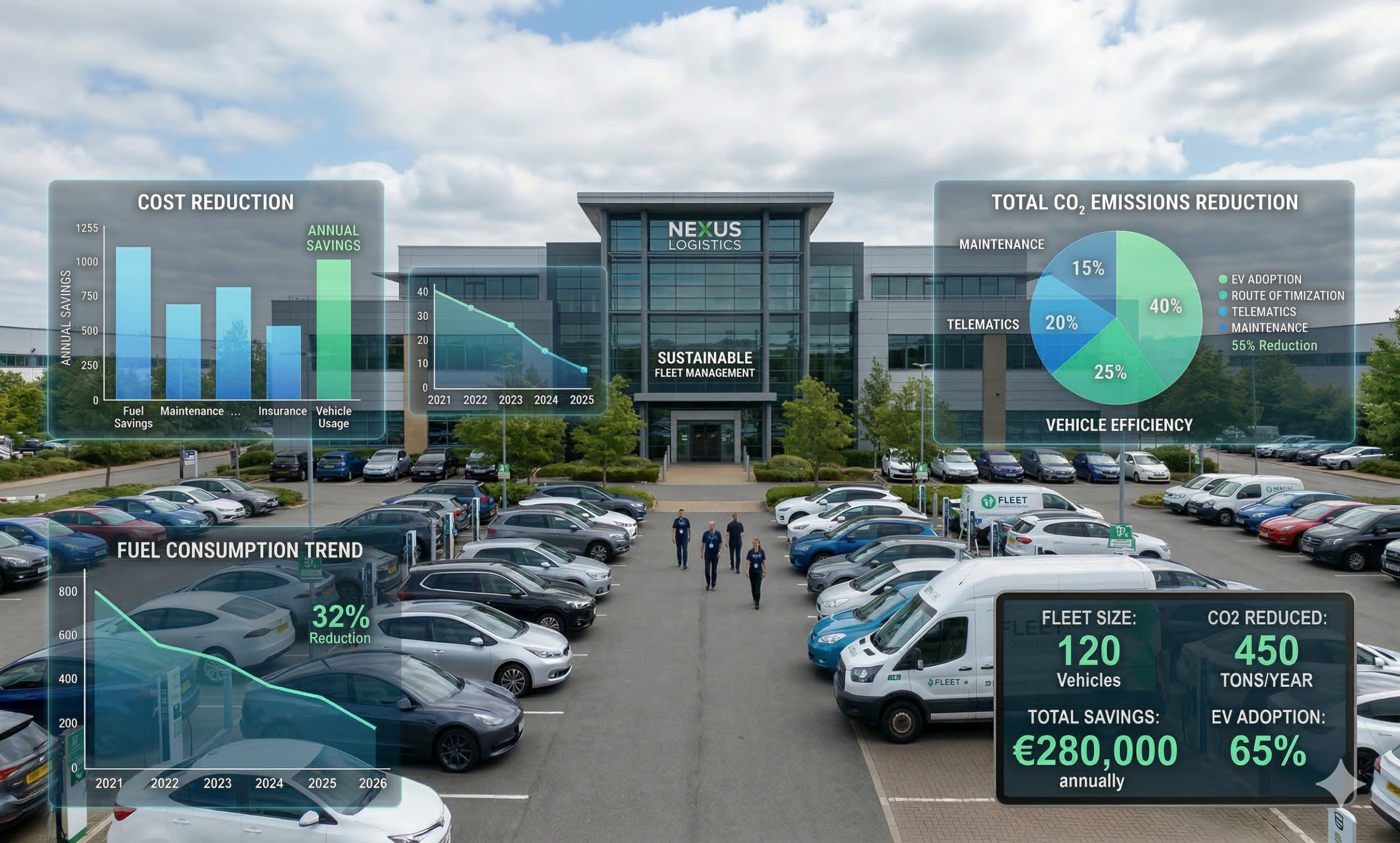
Fleet management has become a strategic challenge for businesses. Rising fuel prices, evolving automotive taxation, and growing environmental regulations are forcing companies to rethink how they manage their vehicles.
Yet in many small and medium-sized businesses, fleet management is still handled with spreadsheets, scattered documents, and manual processes.
The result: poor cost visibility, time lost collecting information, and difficulty tracking the company’s carbon footprint.
In this article, we explore why fleet management is becoming critical for businesses and how digital tools can help reduce both costs and environmental impact.
Why Fleet Management Is Becoming a Strategic Priority
Company vehicles often represent one of the largest operating expenses for businesses.
The Total Cost of Ownership (TCO) of a vehicle goes far beyond the purchase price. It includes:
- fuel or electricity
- maintenance and repairs
- insurance
- vehicle taxes
- administrative costs
- resale value
Industry studies show that maintenance and operating costs can represent up to 40% of a vehicle’s total lifecycle cost.
Without proper monitoring, these expenses can quickly accumulate and significantly impact a company’s profitability.
The Environmental Impact of Corporate Fleets
The energy transition is also pushing businesses to rethink their mobility strategies.
Transport remains one of the largest sources of greenhouse gas emissions in Europe. According to the European Environment Agency, road transport accounts for around 72% of transport-related CO₂ emissions in the European Union.
For companies, this means:
- increasing regulatory pressure
- growing expectations around carbon reporting
- stronger incentives to reduce emissions
Fleet management therefore plays an important role in reducing a company’s carbon footprint.
Key actions include:
- optimizing vehicle usage
- monitoring fuel consumption
- encouraging eco-driving
- progressively electrifying the fleet
The Everyday Challenges of Fleet Managers
In many SMEs, fleet management is not a full-time role. It is often handled by:
- an administrative manager
- an HR manager
- a procurement manager
- or even the company’s CEO
These profiles must deal with a wide range of responsibilities, including:
- tracking vehicle maintenance and servicing
- managing insurance claims
- monitoring mileage
- collecting invoices and documents
- ensuring regulatory compliance
When information is spread across drivers, garages, emails, and invoices, companies often face:
- significant time lost gathering information
- poor visibility on real fleet costs
- delayed vehicle maintenance
- limited ability to analyze fleet performance
The Digital Transformation of Fleet Management
To address these challenges, more companies are adopting digital fleet management solutions.
These platforms centralize all vehicle-related information in one place, including:
- maintenance history
- vehicle documents and invoices
- mileage tracking
- maintenance costs
- accident and claim management
Modern solutions also involve drivers directly through mobile applications.
Drivers can then:
- receive maintenance reminders
- book service appointments
- upload invoices and documents
- access the vehicle’s maintenance history
All information is automatically synchronized with the fleet manager’s dashboard, helping companies save time and improve data reliability.
CodeNekt for Fleet: A Smarter Way to Manage Company Vehicles
To help companies address these challenges, CodeNekt for Fleet offers a comprehensive fleet management solution designed for SMEs.
The platform combines:
- a mobile application for drivers
- a SaaS dashboard for fleet managers
Through the mobile app, employees can manage vehicle maintenance easily: receiving service reminders, booking appointments, and uploading documents directly from their smartphone.
All this information is automatically synchronized with the fleet management platform, enabling companies to centralize:
- vehicles
- drivers
- maintenance records
- claims
- administrative documents
This approach helps empower drivers while significantly simplifying fleet management for companies.
The Benefits of Digital Fleet Management
mplementing a digital fleet management solution can help companies:
✔ reduce operating costs
✔ improve vehicle maintenance tracking
✔ save administrative time
✔ better control Total Cost of Ownership (TCO)
✔ reduce the fleet’s carbon footprint
✔ increase driver accountability
Fleet management should no longer be seen as an administrative burden but rather a powerful performance lever for businesses.
Conclusion
With evolving regulations, rising mobility costs, and increasing environmental expectations, fleet management has become a strategic topic for businesses.
Digital tools now make it possible to centralize data, simplify collaboration between drivers and managers, and gain real-time visibility into fleet performance.
Companies that modernize their fleet management today will be better positioned to reduce costs, improve operational efficiency, and support their sustainability goals.